Clear sky, steady wind, the deck crane already swinging into position. By mid-morning both units were down inside the hold. This is the field note from the terminal — the kind of writing we keep for the loading photos, not the brochure.
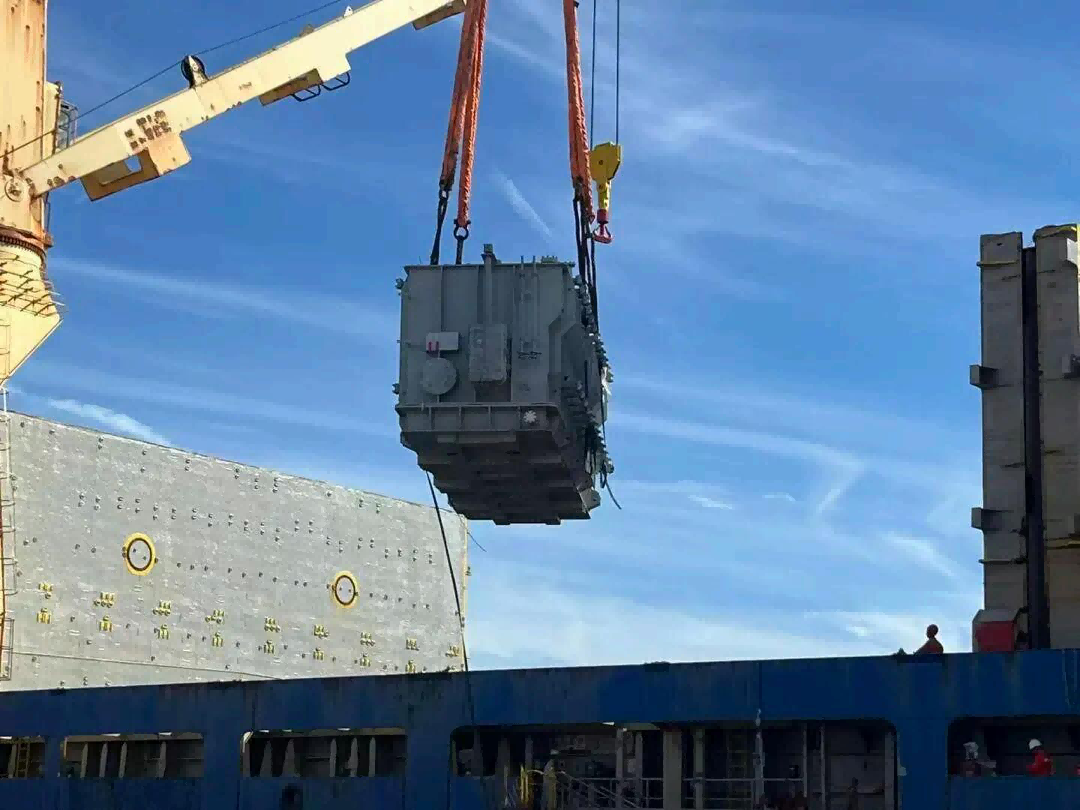
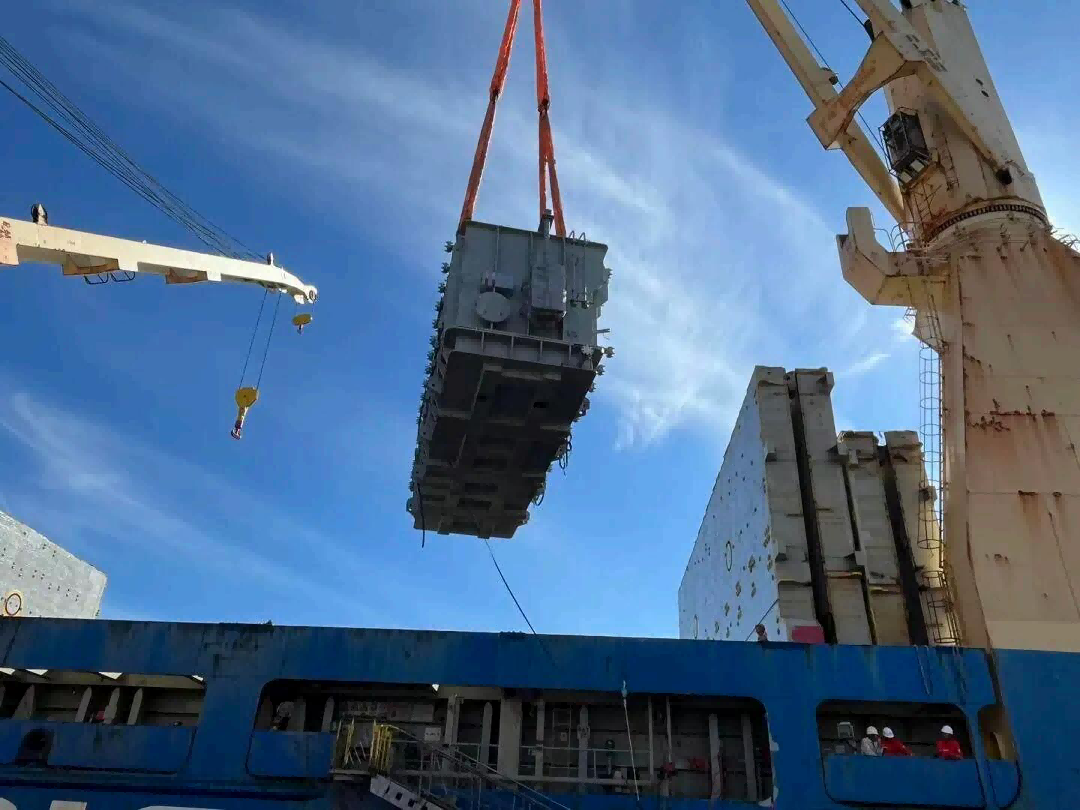
On the morning of the lift, a 600-ton deck crane picked up the first unit from the apron at a Chinese port. Twelve men on deck, four signalmen, one surveyor from the owner's side, one from the carrier. Everyone watching the same thirty centimetres between the sling and the hatch coaming.
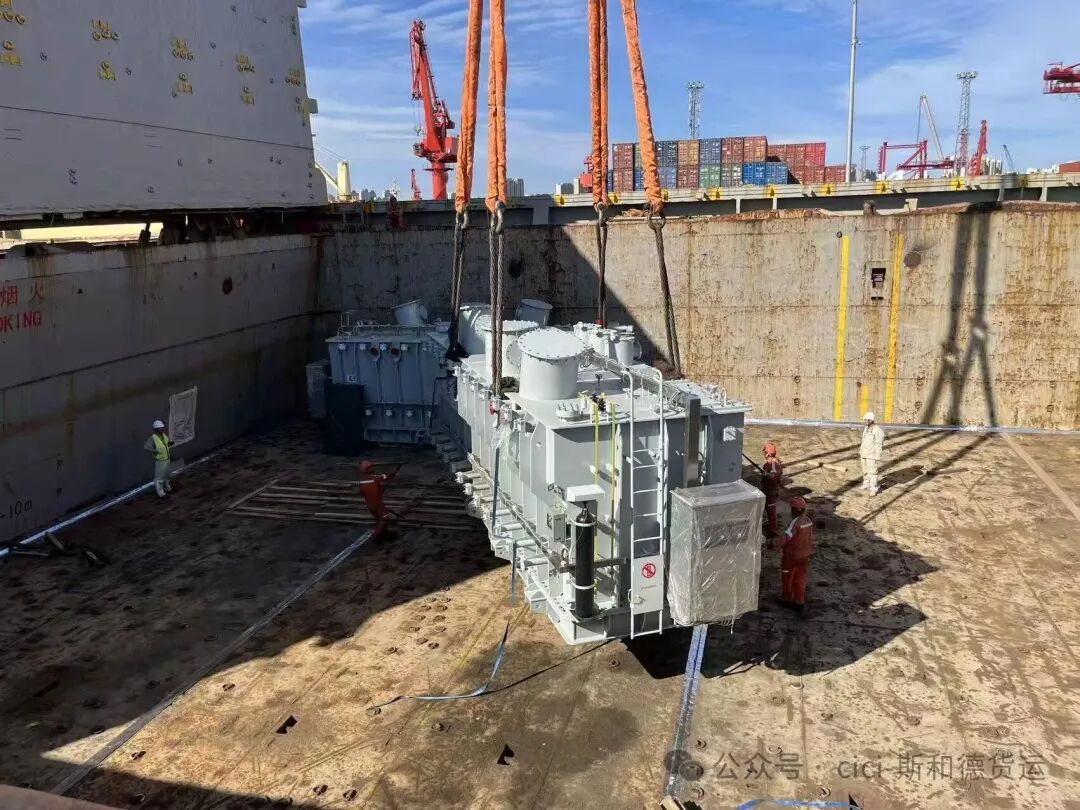
The orange lifting slings tightened, the unit lifted clean, and the deck crew guided it down without a single touch against the ship's side. The work was quiet. The site was quiet. That is usually how a successful heavy-lift lift sounds — the fact that nothing was said afterwards is the only review that matters.
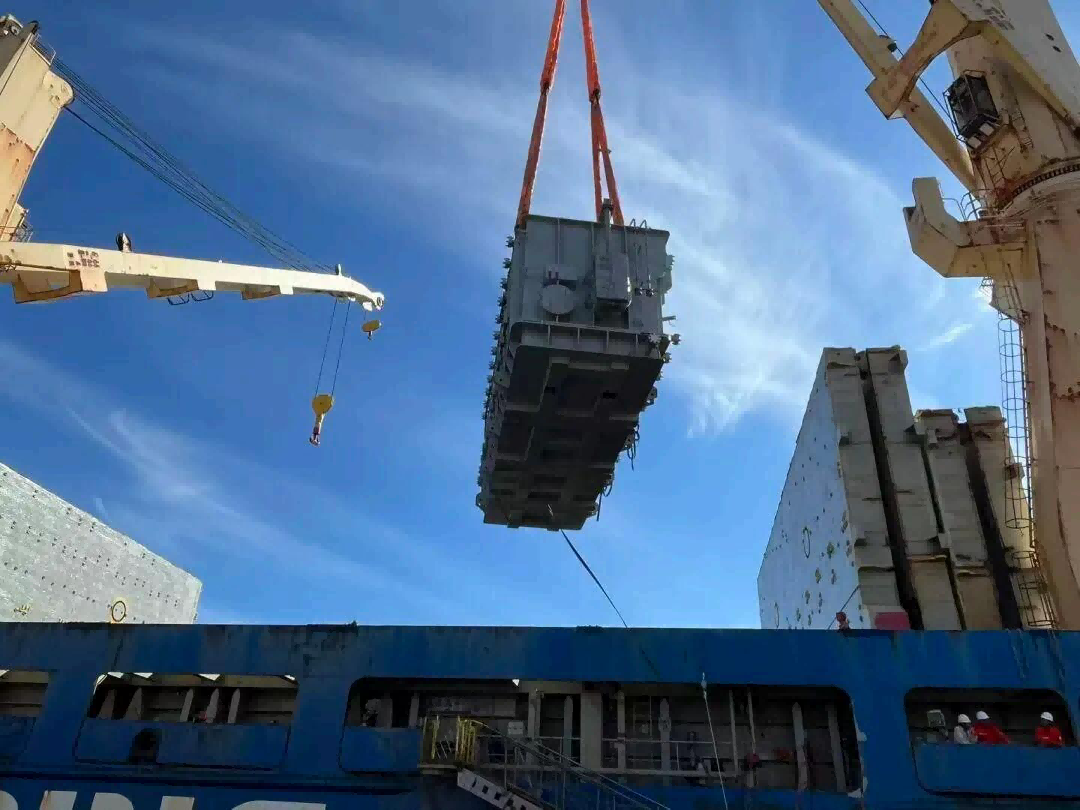
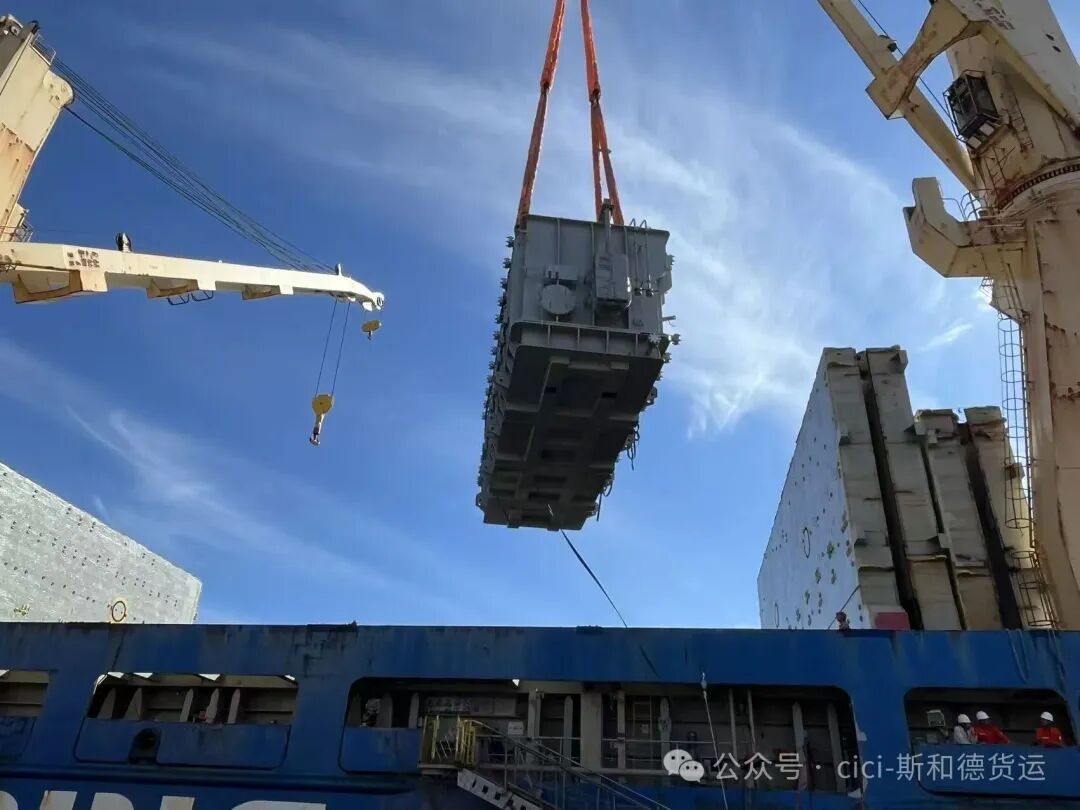
A single 128-ton transformer for a power grid project is not a container booking. Behind it, there is always a longer list than the customer expects:
If any one of these goes wrong, the project slips. If several go wrong, the cargo is at risk. Heavy-lift logistics is not "book a cabin and send a ship". It is a system project that needs experience, equipment and accountability working in the same direction.
Customers often ask: why are you sending us the same lifting plan for the third time?
The honest answer is short. Because the unit is worth several million US dollars, and "about right" is not good enough. The bigger the cargo, the less room there is for "we'll handle it on the day".
For equipment worth several million dollars, safety is more important than speed. Always.
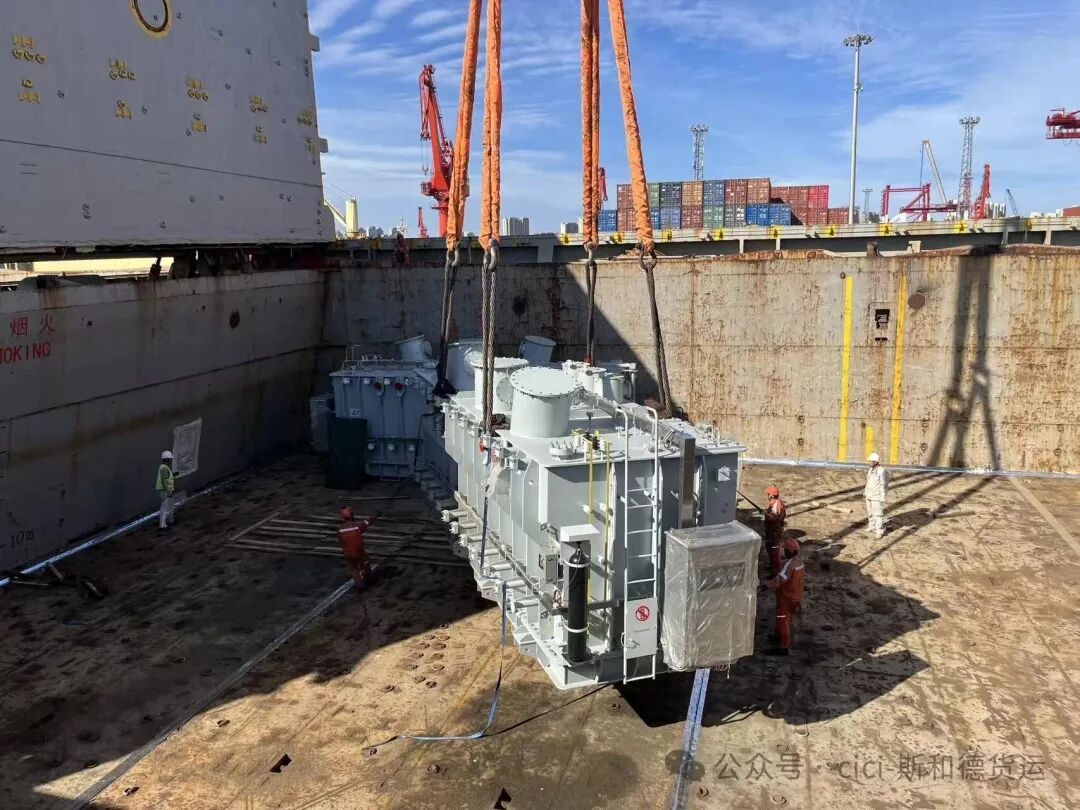
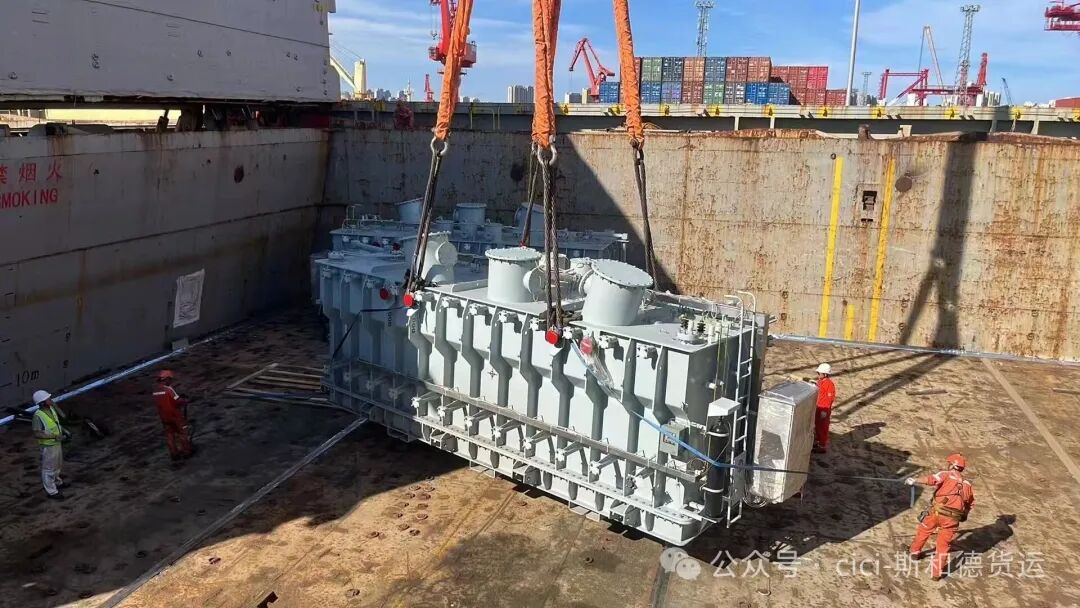
Over the past decade we have watched more and more Chinese-built equipment cross the Indian Ocean and the Atlantic:
One ship after another. Each shipment becomes a factory, a transmission line, a mine, an industrial park on the African continent. Logistics never gets the spotlight. But every project behind it is held together by people who do not see each other, all working the same checklist.
The wind on the apron was strong that day, but the sky was clear.
Standing on the dock, looking up at the vessel, the red quay cranes and the transformer easing down into the hold — international freight forwarding is a tough industry. It is also, mostly, quite ordinary.
We do not have dramatic stories.
We only have one loading after another, one port call after another, one safe arrival after another.
But it is exactly this ordinary work that connects Chinese manufacturing with the construction sites far away.
Two 128-ton transformers, on their way to Africa now. Fair winds and following seas.
May they cross the ocean and, on African soil, light up another city, another village.
And may every dock worker, factory hand, ship's officer, warehouse crew and back-office colleague who quietly keeps the chain moving — be able to say: the cargo arrived, and I did my part.
Every safe arrival is the only answer we ever need.
— Cici & SPEED International Freight Forwarding
Send us the unit dimensions, weight and destination port. Our heavy-lift desk will come back with a feasibility note, a vessel option and a realistic budget — usually within one working day.
👉 Cargo that big deserves a checklist, not a guess.
A: Generally, any single unit or package over 100 metric tons, or oversized cargo that cannot fit inside a standard container, is treated as heavy-lift or project cargo. It usually requires a dedicated vessel with deck cranes, engineered lashing and a stowage plan.
A: Because at this weight, a small error compounds. Lifting point position, sling angle, hold clearance, lashing and the discharge port's crane capacity all have to be checked on the unit and at the destination — not just on paper.
A: Yes. We work with vetted local partners for road and river transport, including bridge weight surveys, axle load checks and route surveys for oversized units.
A: Sea transit depends on the destination port — typically 25 to 45 days. The bigger variable is pre-loading preparation: vessel selection, lashing drawings, port approvals and discharge survey, which we usually run 2 to 4 weeks ahead of the lift.