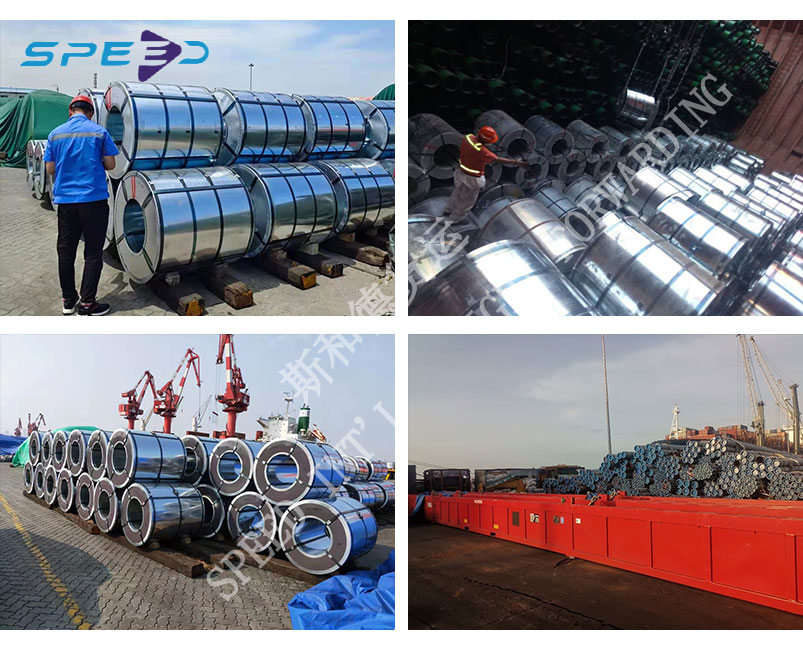
For over two decades at the forefront of global logistics, I’ve witnessed firsthand the complex dance of moving heavy industry into new frontiers. One question persists in boardrooms and ports alike: What are the key challenges for break bulk shipping of steel to emerging markets? It’s more than just moving cargo; it’s a meticulous orchestration against uncertainty. At SPEED, we’ve built our legacy on transforming these logistical hurdles into streamlined corridors. The journey of Break Bulk Cargo-Steel Materials is fraught with unique obstacles, from port limitations to volatile handling demands. Let’s delve into the core issues and how a partner with deep expertise makes all the difference.

Why Is Infrastructure a Decisive Factor for Break Bulk Steel Delivery
Emerging markets promise growth, but their port and inland infrastructure often tell a different story. The primary challenge isn’t the shipping itself, but the endpoints. Can ports handle heavy-lift operations? Are berths draft-sufficient? Is there adequate yard space and specialized equipment like heavy-duty cranes or flat-top trailers? Many terminals are optimized for containers, not the irregular, heavy nature of Break Bulk Cargo-Steel Materials.
Our solution at SPEED is built on pre-vetted infrastructure networks. We don’t just book a ship; we secure the entire pathway.
Our Pre-Shipment Protocol Includes:
Site-Specific Surveys: Our teams conduct physical port and route assessments.
Equipment Verification: Confirming the availability and capacity of cranes, haulers, and barges.
Contingency Routing: Always having a validated alternate discharge plan.
Consider the typical equipment mismatch we routinely solve:
| Common Port Limitation | SPEED Mitigation Strategy |
|---|---|
| Insufficient Quay Crane Capacity | Arrangement of floating cranes or heavy-lift vessel side-loaders. |
| Shallow Draft at Berth | Coordination of partial discharges followed by transshipment via lighter barges. |
| Congested Storage Yards | Securing exclusive, secured open-yard storage close to the port prior to vessel arrival. |
| Poor Road Gauge/Weight Limits | Engineering split-load configurations for local trucking and obtaining special transport permits. |
How Can You Navigate Documentation and Regulatory Maze
If infrastructure tests physical limits, documentation tests patience and compliance. The question is, how can you prevent costly delays from paperwork? Emerging markets often have evolving, non-standardized, and highly stringent requirements for Break Bulk Cargo-Steel Materials. Missing one stamp, one certificate, can mean weeks of demurrage.
At SPEED, we treat documentation with the same precision as engineering. Our digital platform provides real-time tracking for every document, but it’s our local knowledge that unlocks borders.
What Are the Critical Product Parameters for Secure Steel Transport
Not all steel is created equal, and its transport specs dictate the entire logistics chain. Asking the right questions about your cargo is the first step to a successful shipment. Here are the parameters we analyze at SPEED to build a failure-proof plan:
| Product Parameter | Logistics Implication | SPEED's Handling Standard |
|---|---|---|
| Dimensions & Weight (Length, Width, Height, Unit Weight) | Determines vessel type, stowage plan, lifting gear, and inland transport mode. | Custom 3D stowage modeling to maximize space and minimize damage. |
| Type & Packaging (Coils, Plates, Beams, Bundles, Crates) | Dictates handling method, lashing/security needs, and susceptibility to damage. | Use of specialized dunnage, non-corrosive lashing, and unit-specific securing protocols. |
| Surface Finish & Sensitivity (Galvanized, Painted, Cold-Rolled) | Defines exposure tolerance to moisture, salt, and physical contact. | Condition-controlled storage, premium waterproof wrapping, and strict no-hook policies. |
| Total Volume & Hazard Class | Influences freight rate structure and requires specific safety documentation. | Accurate volumetric optimization and preparation of all mandatory MSDS/SDS sheets. |
Your Break Bulk Cargo-Steel Materials FAQ
What are the main advantages of break bulk for steel over container shipping?
Break bulk is ideal for oversized, heavy, or awkwardly shaped Break Bulk Cargo-Steel Materials that cannot fit into standard containers. It allows for direct loading/unloading, reduces handling次数 (which lowers damage risk for sensitive finishes), and can be more cost-effective for large project volumes.
How do you ensure my steel won't corrode during the ocean transit?
We implement a multi-layer protection strategy. This includes applying industry-approved VCI (Vapor Corrosion Inhibitor) papers or coatings, using desiccant bags in enclosed spaces, ensuring proper ventilation in holds, and strategically planning routes to minimize exposure to salt-laden air and extreme humidity cycles.
How do you handle last-minute changes in delivery schedules at emerging market ports?
Our local port agents are embedded in the daily operations of their terminals. They provide us with real-time berth availability and congestion updates. This allows SPEED to dynamically adjust vessel speed (slow steaming) or secure alternative lay-by berths, giving us the agility to manage schedule shifts and avoid costly waiting time.
Is In-Transit Damage Control and Cargo Security a Major Concern
Absolutely. The journey for Break Bulk Cargo-Steel Materials is dynamic. Vessel motion, shifting loads, and moisture are constant threats. Furthermore, security at less-frequented ports can be a genuine risk. The question we answer is: how do you turn a vulnerable cargo into a fortress? Our lashing and securing plans are class-approved. We use GPS-tracked seals on all cargo doors and employ 24/7 monitored, geofenced storage for cargo at rest. Our reports don’t just state “cargo secured”; they include torque wrench readings for lashing rods and humidity logs from the cargo hold.
Where Does the Real Cost Hide in Break Bulk Shipping
The headline freight rate is just the beginning. The true cost—and the real risk—lies in delays, damage, and surprises. Demurrage charges at congested ports can dwarf the ocean freight. The cost of a corroded steel coil upon arrival can ruin a project’s budget. At SPEED, our pricing models are transparent and inclusive of risk mitigation. We show you the potential pitfalls and the premium for avoiding them, turning unpredictable costs into a managed, predictable investment. Managing Break Bulk Cargo-Steel Materials requires a partner who sees the total cost of ownership, not just the ticket price.
Are You Ready to Transform Your Steel Logistics Challenge into a Competitive Advantage?
Tackling the break bulk shipping of steel to emerging markets requires more than a carrier; it demands a partner with ingrained experience, a localized network, and an engineering mindset. For twenty years, I’ve seen projects succeed or fail based on this choice. SPEED is built to be that decisive partner. We don’t just move your Break Bulk Cargo-Steel Materials; we own the process from mill gate to final site, ensuring integrity, timing, and total cost control.
Stop letting logistics uncertainty dictate your project timelines and budgets. Contact us today for a comprehensive route analysis and a transparent proposal. Let’s engineer your supply chain success together.